

CANE SUGAR MANUFACTURING PROCESS
The industrial process for sugar manufacturing involves the application of several processes to transform sugarcane juice into crystals and clean them naturally from impurities that can harm the organism.

The manufacturing process consists of the following sub- processes:
a. Entrance
b. Milling
c. Clarification
d. Evaporation
e. Crystallization
f. Separation
g. Drying
h. Packing
Starts by weighing the units on kg/Tones that transports sugar cane in the mill and that are at the entrance of the factory area. Also, this is where the quality of raw material (RCS) is determined, taking samples that are analyzed continuously in the quality control lab.
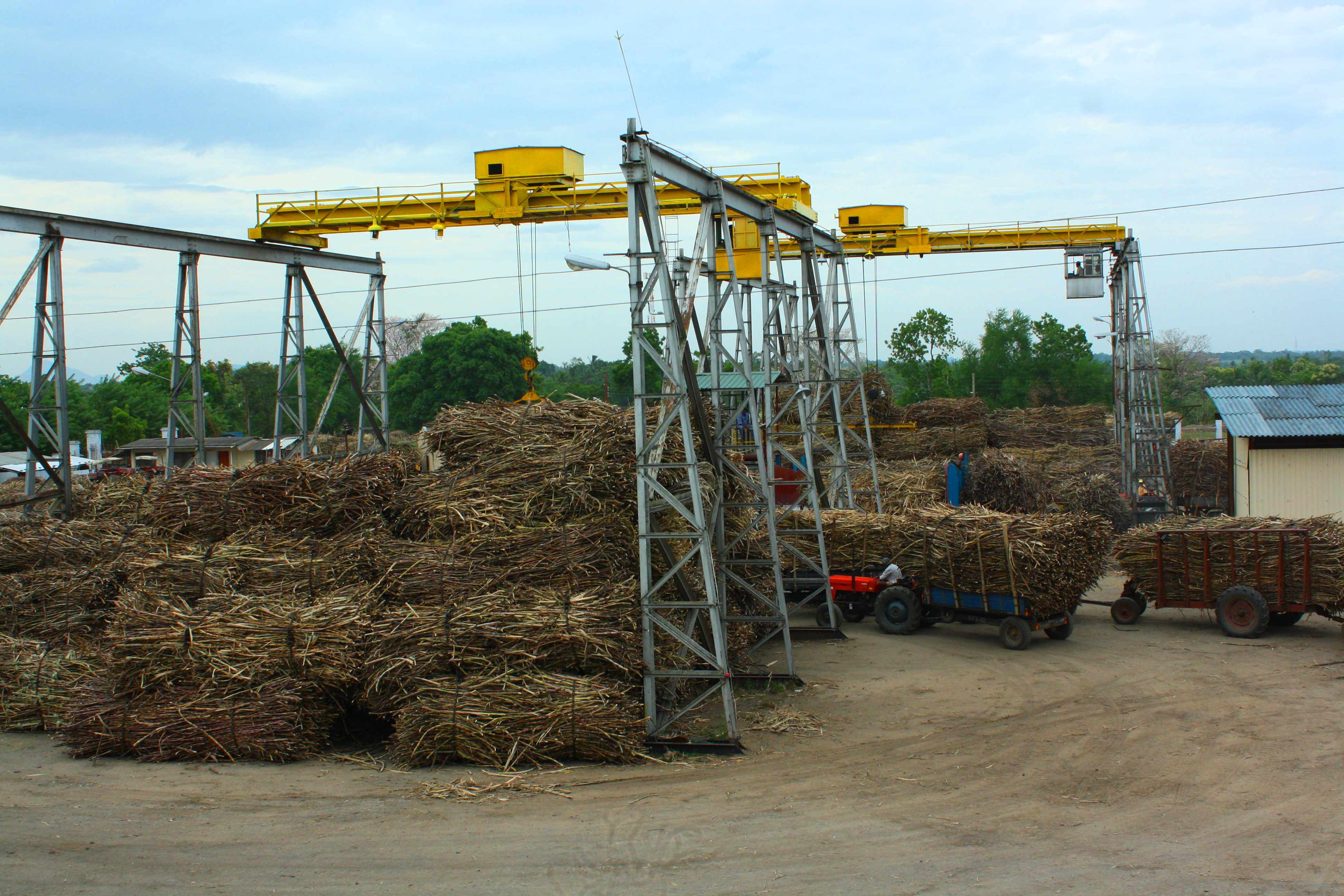
The sugarcane that arrives at the manufacturer is discharged on the feeding tables through Gantry crane of 12 M.T. To have a cleaner process, in the sugarcane tables water is applied between 110º and 120ºF for washing, removing solids or foreign matter.Then, the sugarcane undergoes a preparation process that consists of braking and removing fiber from the stem cells through cutters.
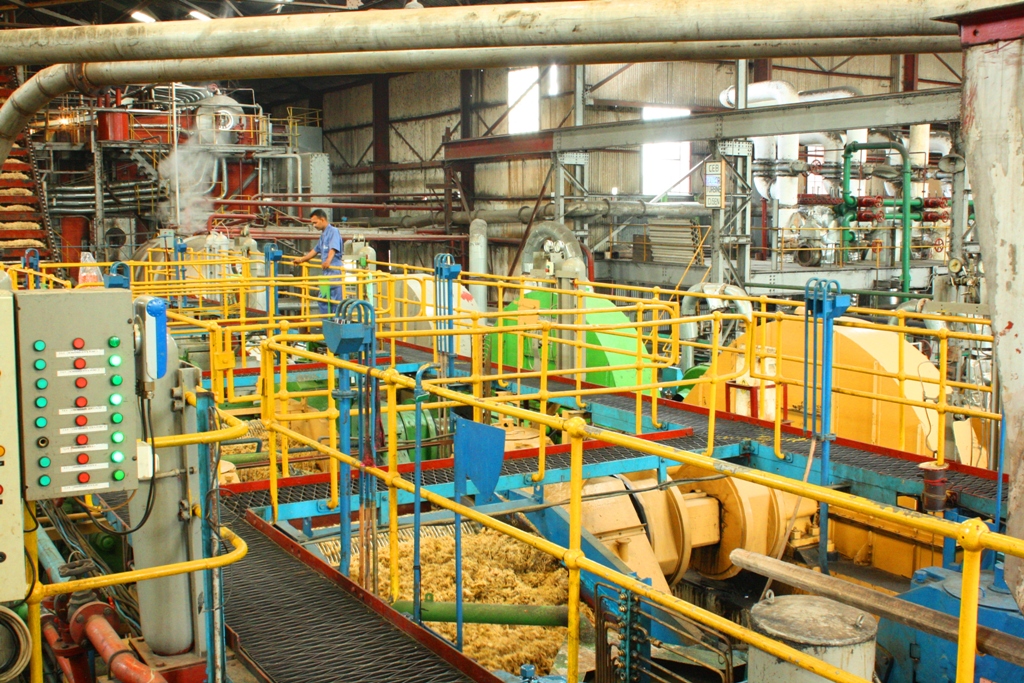
This is a continuous process that is currently carried out in fine no. of three roller mills total daily milling capacity of 2000 M.T.
The prepared sugar cane is fed into those mills, which undergoes a series of extractions using roll mills. To make the mill process more efficient, the poor juices of the subsequent millings are reprocessed and hot water s applied in the last milling at a temperature between 155º and 179ºF to increase the extraction.
The bagasse is an industrial product that is transported toward the boiler system to use it in its biomass state as fuel. The remaining is used for the emergency stops.
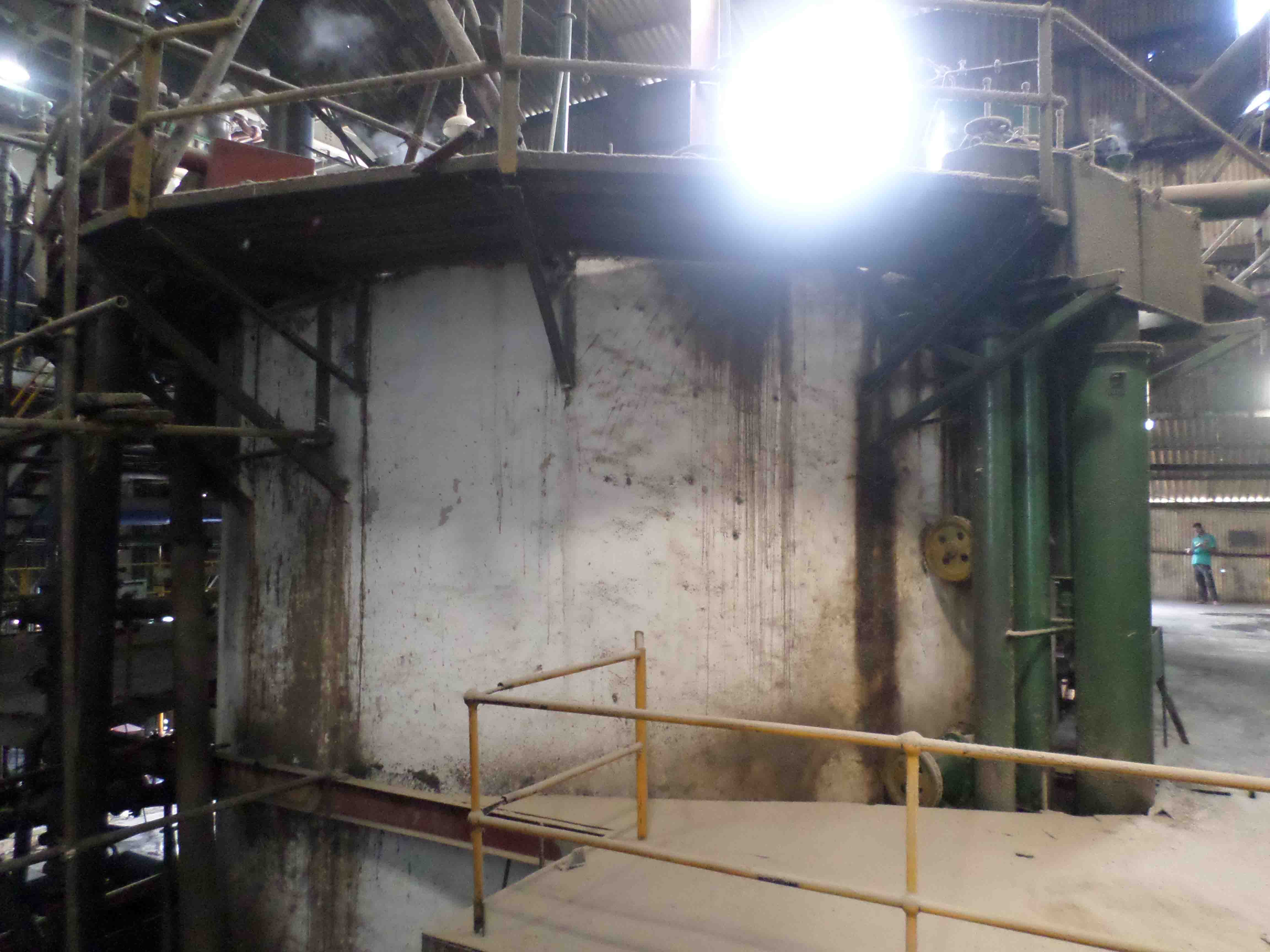
The juice derived form the mills goes through heaters that reach temperatures between 140º and 155º F. Then, it goes through the liming process, maintaining the pH at neutralize conditions.
The juice heating is carried out in three phases. The first one by vegetal vapor of 5.0 psi, reaching temperatures between 175º and 185º F; the second, by vapor 5.0 psi, reaching temperatures between 205º and 215ºF and, the last, with vapor of 10 psi to verify the juice automatically.
With the previous process, when released at an atmospheric pressure, the juice might suffer a slight evaporation in the flash tank, avoiding the flake to fluctuate or decant slowly due to the presence of bubbles trapped inside.
The next step is to feed the juice into clarifiers, slowly, to allow sludge concentration and extracting the same by gravity in a SRI clarifier and pumps in the Rapi door 444. In thefinalphase of this process, vibrating sieves with a 110 mesh are used for the eradication of bagasse and avoid it falling into the final product.
The head filters are indispensable for the process because without the same the sucrose loss in the filter cake would be significant.
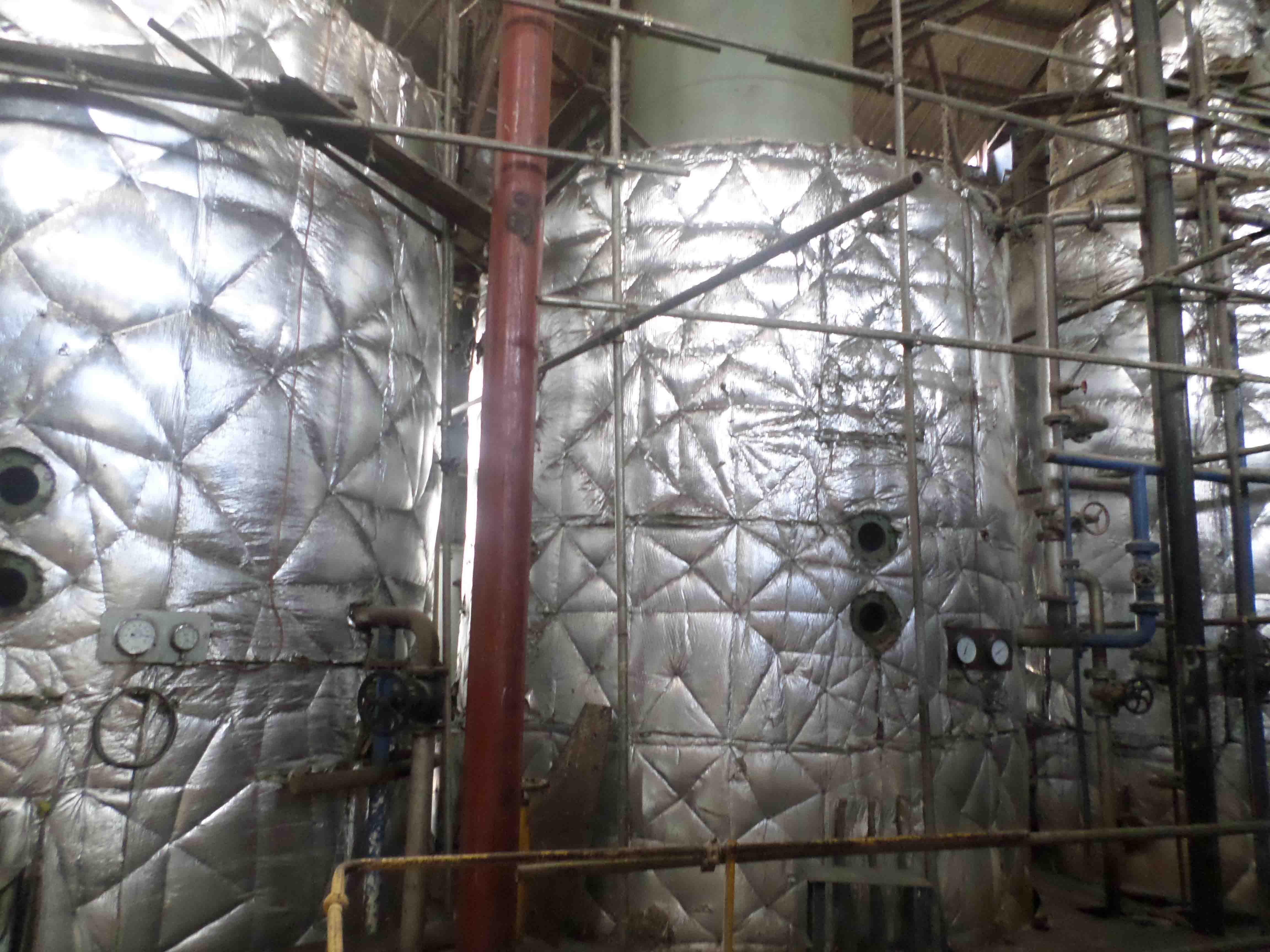
The evaporation system operation in the plant is the fivefold effect, not only for the white line, but also for the raw line. The operation is quite simple because the entrance and exit conditions, level of each evaporator, and extraction of vegetable vapor toward the exterior are established.
The evaporation is carried out in Roberts type evaporators in which the vapor and juice are found in separate chambers that flow in the same direction. The juice goes from one evaporator to another with pumps known as “of transfer”. The global control of an evaporator is executed through the stabilization of five very important factors:
• The concentration of the final product
• The absolute pressure in the last body
• The vapor and juice feeding to the first evaporator
• Removal of condensates and airborne gasification
• The embedding control in each evaporator
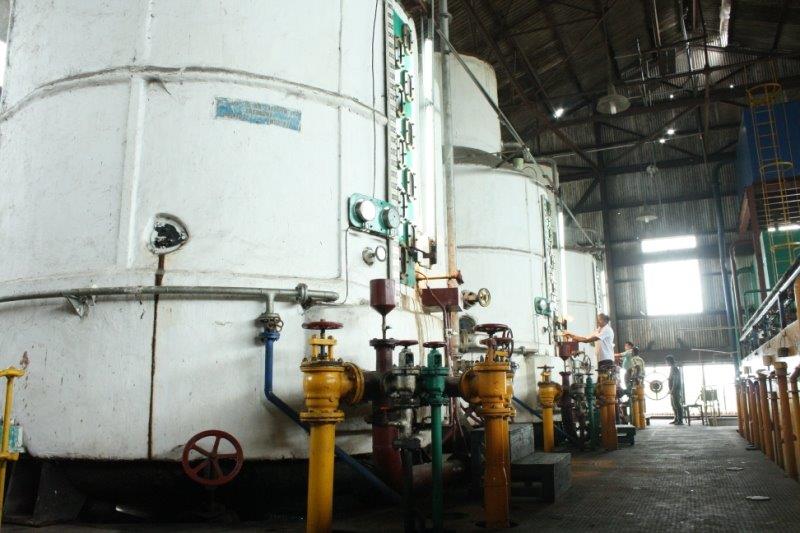
The sucrose crystallization or growth that contains syrup is carried out in vacuum containers. This cooking, according to its purity, will sugar. This is a delayed process that is accelerates industrially introducing a few microscopic grains o sugar, known as seeds, into the container. The operator’s experience should judge the exact cooking point to obtain a good product.
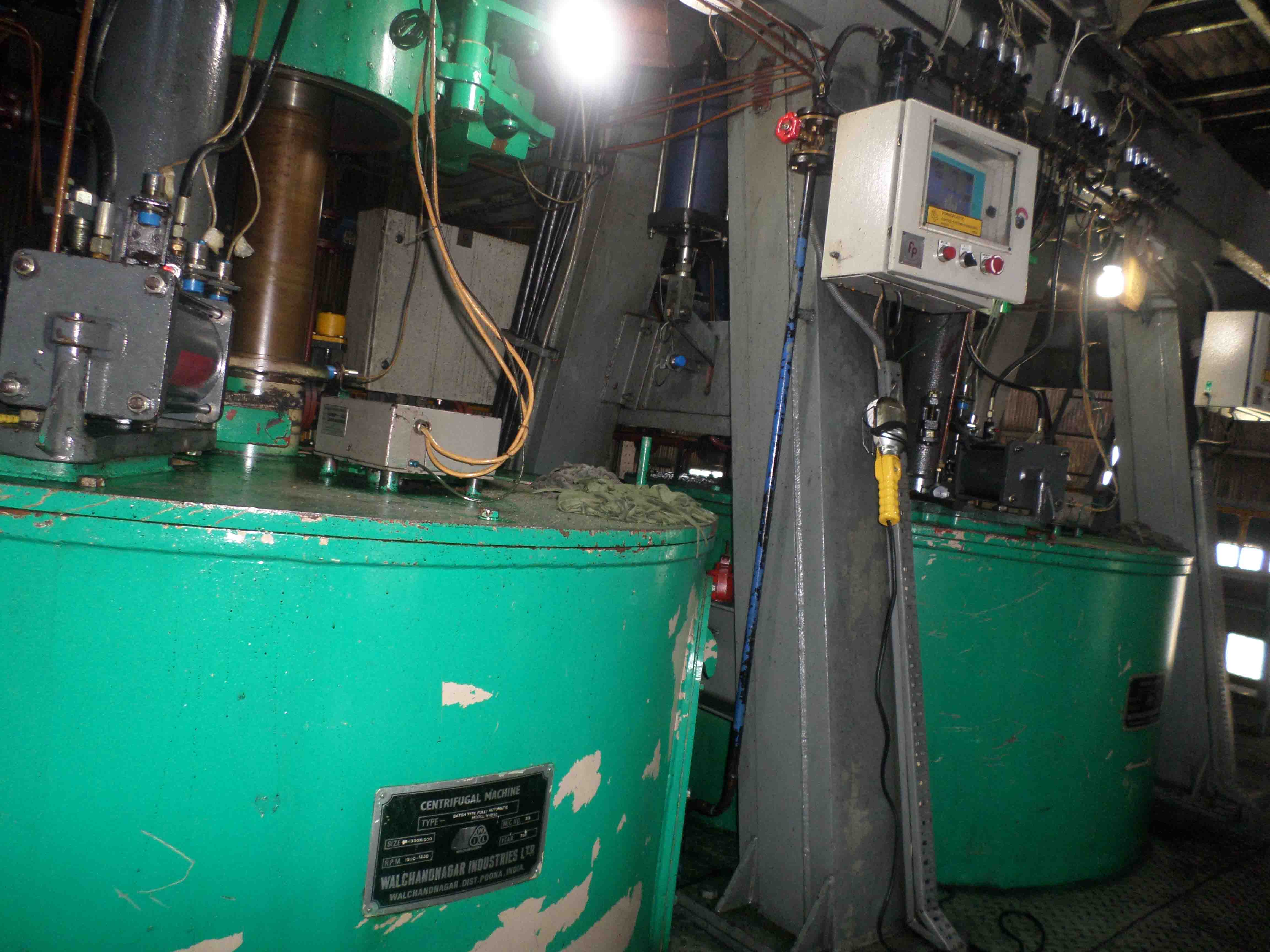
The sugar crystal are separated from the molasses left in the centrifuges; cylindrical equipment that rotates at a high speed. The molasses passes through the screen; the crystals are trapped within the centrifuges and then washed with water. The molasses is then returned to the containers or used as raw martial for the production of alcohol in the distillery. The sugar is than transferred to the drying and cooling process.
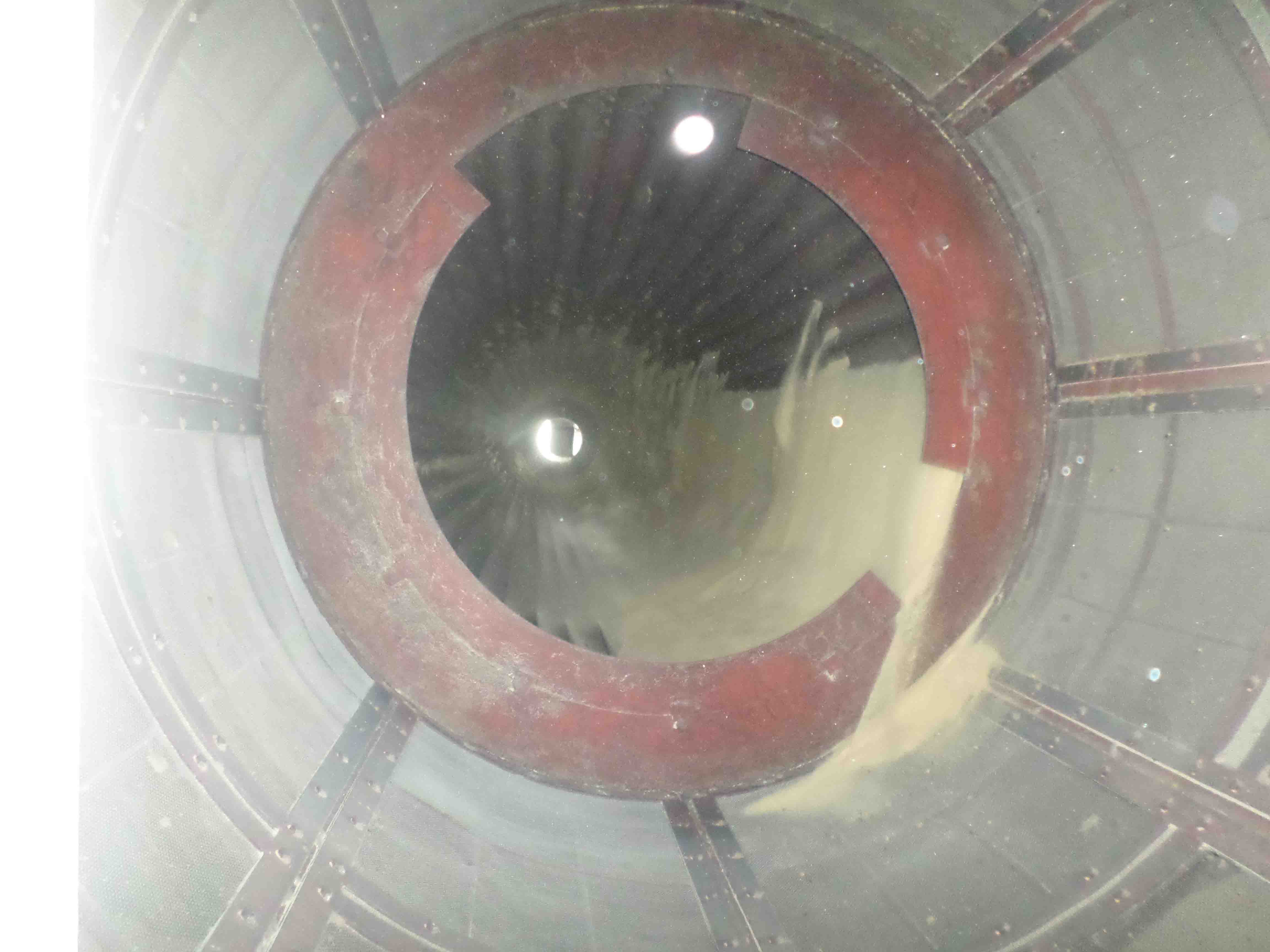 In the centrifuge process, is used to wash sugar, which results in a humidity between 0.3 % and 0.6% ; therefore , it is necessary to pass it through the draying process to reach levels between 0.2 % for sugar exhaust steam is used for the dryer.
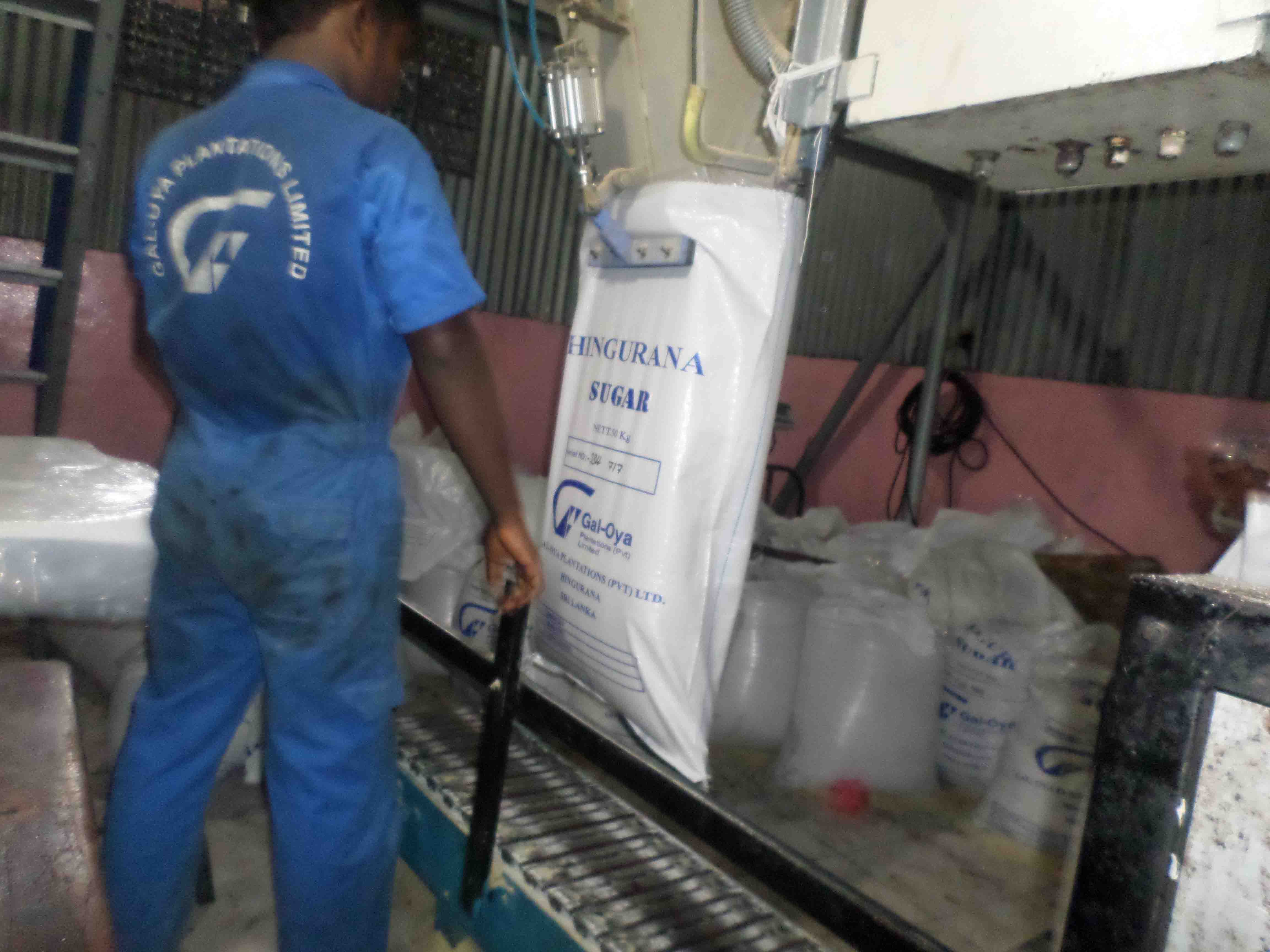 Brown sugar goes directly from the dryer to the storage bins. Standard sugar is packed in sacks of 50 kg to be commercialized locally.